Does Seattle Have Hard Water? Why Your Shower Film Isn't What You Think

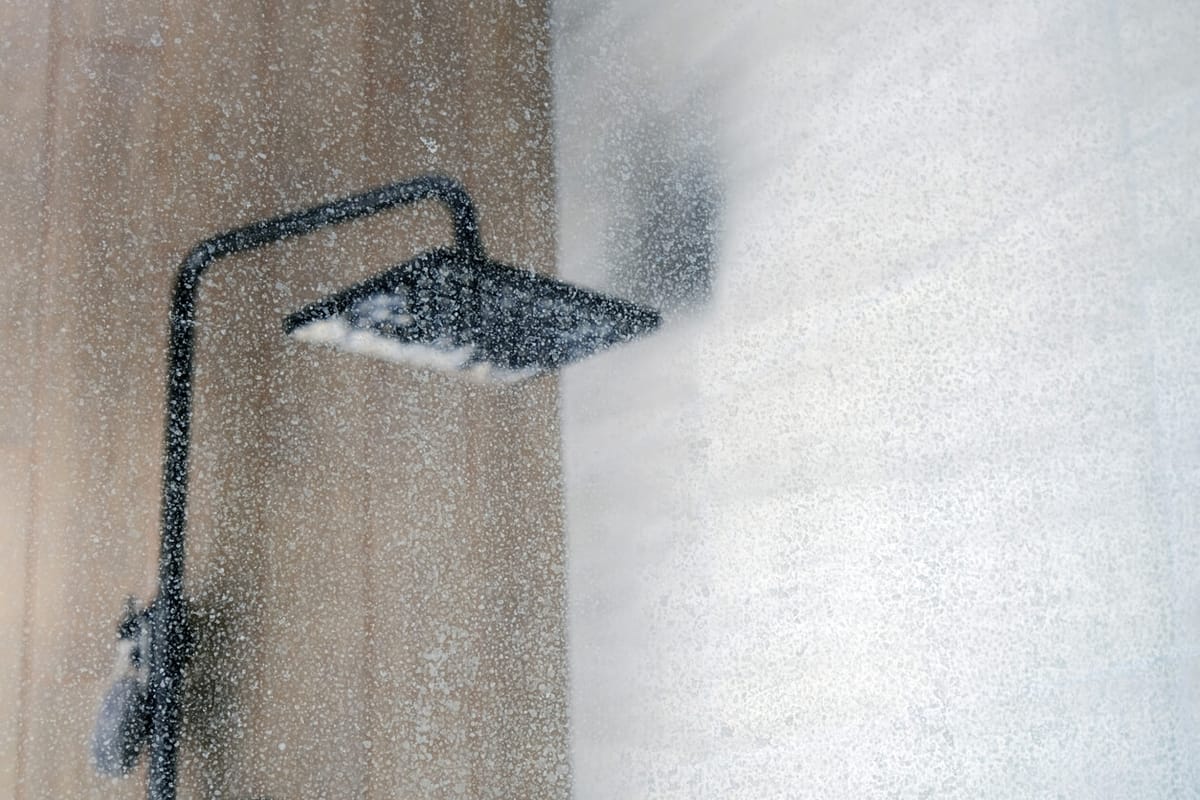
You clean the shower properly on Saturday. Glass clear, tile bright, the whole thing. By Wednesday there's a dull film back on the glass and a grayish haze on the tile, and when you run a finger down it, it feels slightly greasy rather than gritty.
So you buy the product that promises to destroy hard water stains and limescale. You spray it, you wait, you scrub. It barely touches the film.
Almost everyone in this situation assumes hard water is the problem, because that's what every cleaning article on the internet assumes. For most of the Seattle area, it's the wrong answer, and it's the reason the product in your hand isn't working. There are a couple of genuine exceptions on the Eastside, which we'll get to in a moment, but if you're in Seattle proper the film on your glass is something else entirely, and it comes off with a completely different approach.
Does Seattle Actually Have Hard Water?
No. Seattle has some of the softest tap water in the country.
The city's drinking water comes from the Cedar River and Tolt watersheds: mountain snowmelt and rainfall that never spends much time moving through mineral-rich rock. It arrives at your tap with very little dissolved calcium and magnesium in it, and calcium and magnesium are the entire definition of water hardness.
Published figures for the region look roughly like this:
- Seattle: about 23 ppm, roughly 1.3 grains per gallon
- Bellevue: about 25 ppm, roughly 1.4 gpg
- Kirkland: about 27 ppm, roughly 1.6 gpg
- Issaquah: about 70 ppm, roughly 4.1 gpg
- Redmond: depends which side of the river you're on. See below.
For context, anything under about 3.5 gpg counts as soft, and much of the United States sits somewhere between 7 and 15. Seattle is a long way below that. If you've moved here from Phoenix, Dallas, Denver or the Midwest, you have almost certainly noticed the difference: the soap lathers instantly, and rinsing it off takes noticeably longer.
The Exception: Issaquah and Half of Redmond
Before going further, this is the part worth checking, because it flips the advice completely.
Bellevue and Kirkland run on essentially the same soft supply as Seattle. Issaquah is noticeably harder at around 4 grains per gallon. And Redmond is split down the middle: the city reports that homes on its groundwater system run about 90 mg/L, roughly 6 grains per gallon, while homes fed from the Tolt supply sit down around 1.2 gpg. Which one you get depends on which side of the Sammamish River you live on.
In those harder-water pockets you genuinely do get mineral scale, and it looks like this:
- Cloudy white spotting on glass that feels slightly gritty
- Crust building up at the showerhead and on faucet aerators
- White rings in the toilet bowl at the waterline
- Chalky residue on kettles and in the dishwasher
If that's what you're looking at, the acid-based descalers in the cleaning aisle are the right tool and they will work. Plenty of homes on the Eastside are dealing with some combination of scale and the film described below.
For everyone else, which is most of the region, read on.
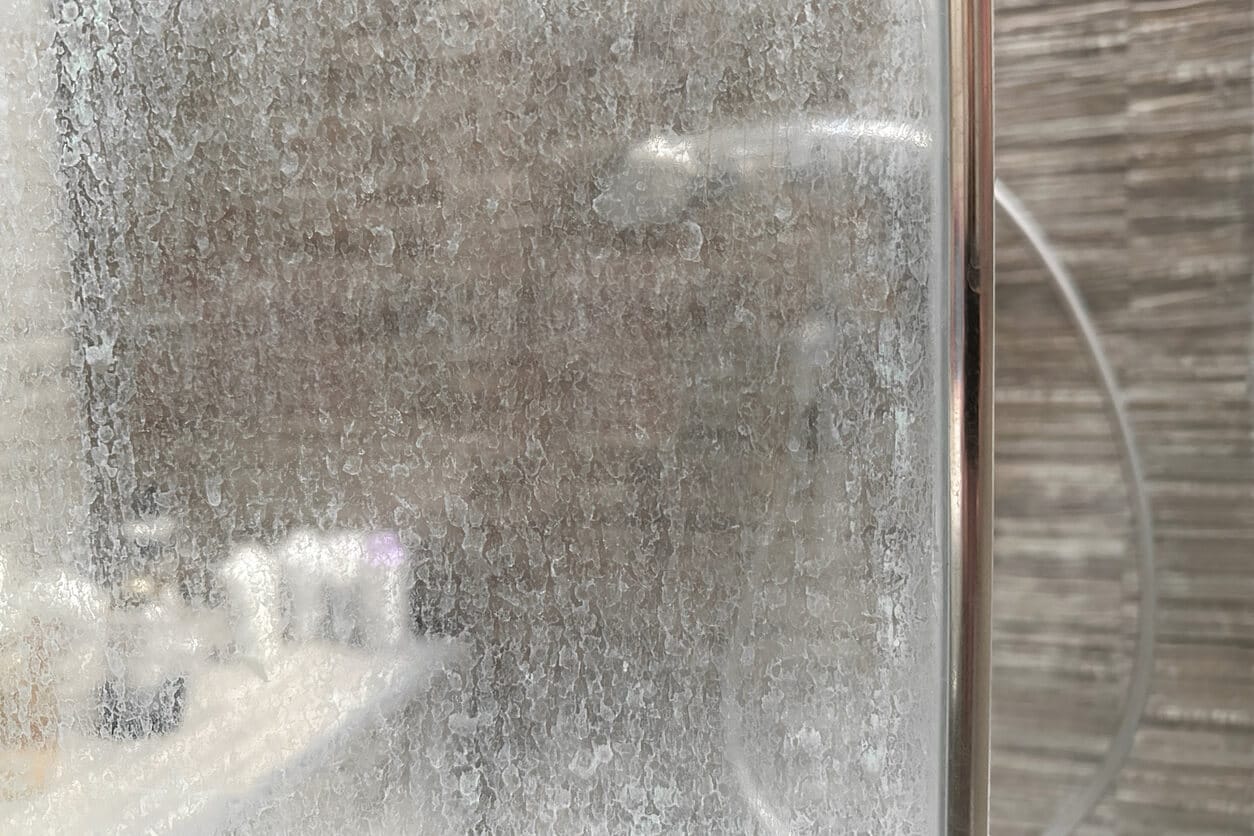
So Why Is There Still a Film on the Glass?
Because "soap scum" is doing two different jobs as a phrase, and only one of them applies here.
In hard water, soap reacts chemically with the calcium and magnesium in the water and forms an insoluble curd. As the USGS puts it, hard water leaves "a slight film of insoluble soap curd on your skin (and on the shower walls and glass doors)." That curd is chalky, whitish, mineral-bound and slightly gritty, and it's what every hard-water product in the store is formulated to dissolve.
In soft water, that reaction mostly doesn't happen. The soap stays soluble. What you get instead is the opposite problem: with no minerals to knock it out of solution, soap lathers more, you use more of it, and it takes far more rinsing to get it off a surface. That's the slippery feeling on your skin that people moving to Seattle always ask about.
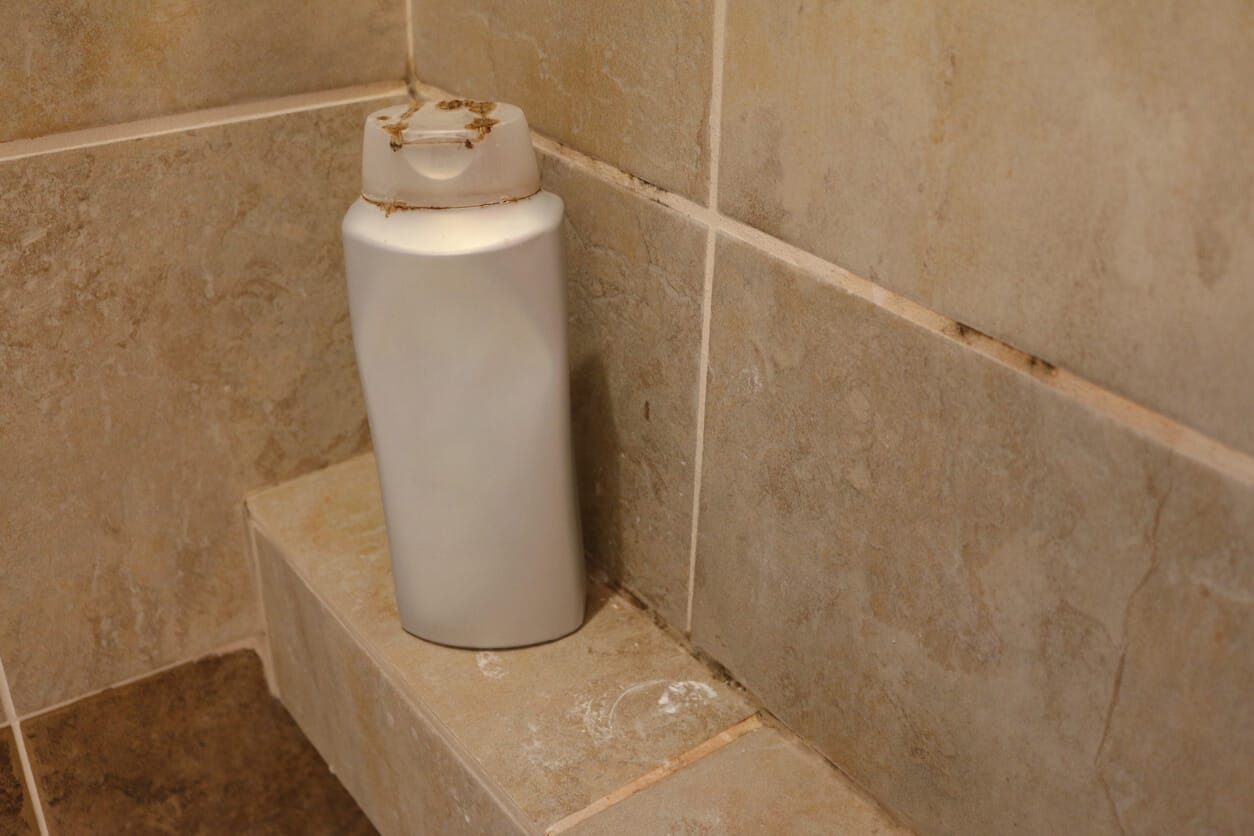
So what settles on your shower walls isn't a mineral deposit. It's an organic film: soap and body wash residue, body oils, skin cells, and above all shampoo and conditioner. Conditioners in particular are engineered to cling. They're built around cationic surfactants and silicones whose whole purpose is to deposit on a surface and stay there. Your hair isn't the only thing in the shower they're depositing on.
That's why it feels greasy rather than chalky. It is grease.
Why the Hard Water Products Don't Work
Look at the back of a limescale or hard-water remover and you'll find an acid, usually citric, lactic, sulfamic or phosphoric. Acids are excellent at one specific job: dissolving mineral deposits and calcium-bound soap curd.
An acid does very little to an oily film. You're attacking a problem you don't have, with a chemistry aimed at a substance that isn't there. Same story with vinegar, which is the internet's default answer to everything and is, again, an acid.
The film you have is fat and surfactant residue. What removes fat and surfactant residue is a degreaser, meaning an alkaline or surfactant-heavy cleaner, plus heat, dwell time and physical agitation.
What Actually Works on a Seattle Shower
The method matters more than the product here, and the sequence below is what we use.
- Warm the surfaces first. Run the shower hot for a minute or two, then turn it off. Warm tile and glass release an oily film dramatically more easily than cold. This single step does more than switching products.
- Use a degreaser, not a descaler. A dedicated bathroom degreaser, a general-purpose alkaline cleaner, or a strong solution of dish soap, which is formulated for exactly this class of soil and works genuinely well.
- Give it dwell time. Five to ten minutes on the surface, not thirty seconds. Most people spray and immediately scrub, which wastes the product entirely.
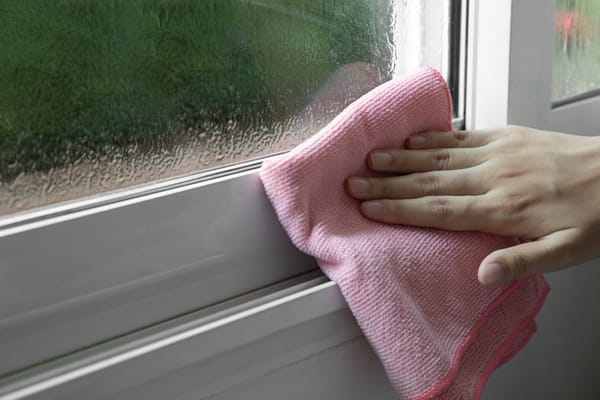
- Agitate. A non-scratch pad on tile, a soft pad or microfiber on glass. For textured tile or a stubborn build-up, a baking soda paste adds mild abrasion without scratching.
- Rinse thoroughly, then dry. Rinsing lifts the loosened film off rather than redistributing it. Drying the glass afterwards is what makes the result last.
One safety note, because bathroom cleaning is where people get this wrong. Never mix an acid cleaner with a bleach-based one, and never mix bleach with ammonia. If you switch products, rinse fully in between.
What Is the Pink or Orange Film?
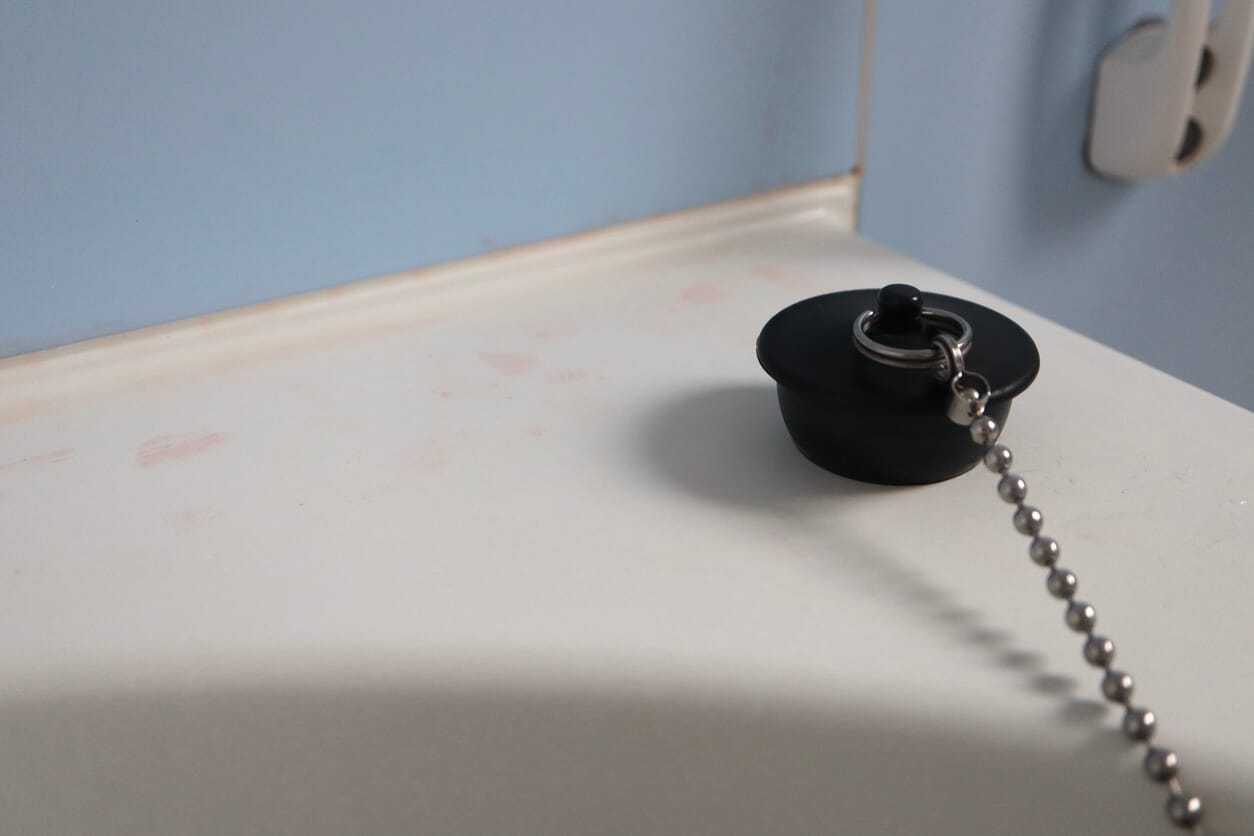
Almost every Pacific Northwest bathroom gets it eventually: a pink or salmon-orange slime in the grout lines, around the drain, along the bottom of the shower curtain.
It isn't rust and it isn't a stain. It's a bacterial biofilm, most commonly Serratia marcescens, and what it eats is the soap and shampoo residue we've just been talking about. It thrives in exactly the conditions a Seattle bathroom provides for most of the year, which is a surface that never fully dries.
Which means the two problems are really one problem. Remove the residue film and you starve the biofilm of its food source. Leave the residue and it comes back within a week no matter how often you disinfect.
How to Make It Come Back Slower
Cleaning harder is the losing strategy. Reducing what lands on the surface is the winning one.
- Squeegee the glass. Twenty seconds after the last shower of the day. Nothing else on this list comes close to it for effort-to-result.
- Rinse the walls down. A few seconds with the handheld or showerhead at the end of a shower carries most of the fresh residue away before it dries onto the tile.
- Reconsider bar soap. Traditional bar soaps leave more film than liquid body washes and syndet bars. If one person in the house uses bars, you'll usually see it on their side of the shower.
- Watch where the conditioner goes. Rinsing it out while standing against the wall deposits it straight onto the tile. Step back into the stream.
- Run the exhaust fan for 20 minutes after the shower, not just during it. Dry surfaces don't grow biofilm, and in a Seattle winter this is the single most useful habit in the house.
When It's Past the Point of Cleaning
Some of what people read as dirt isn't dirt any more.
- Grout that stays dark after cleaning has absorbed soil into a porous surface. It needs deep cleaning, and eventually sealing.
- Caulk with gray or black spotting inside it is finished. Cleaning over it does nothing, because the moisture is behind it. Cut it out and re-caulk.
- Glass with permanent cloudiness may be etched rather than coated, and etching is physical damage to the surface. It doesn't clean off.
A bathroom that's been slowly losing ground for a year or two usually needs one thorough reset before any maintenance routine can hold it. That reset, covering tile, grout, glass and fixtures, is what a deep clean is for, and it's the point at which most people find the weekly wipe-down suddenly starts working.
Frequently Asked Questions
Does Seattle have hard water?
No. Seattle's water is very soft, roughly 1.3 grains per gallon, because it comes from the Cedar and Tolt watersheds. Bellevue and Kirkland are similar. Issaquah and the well-fed part of Redmond are moderately hard.
Then what are the hard water stains on my shower glass?
In most of Seattle they aren't mineral stains at all. They're an oily film of soap, body oil and hair product residue. Mineral scale feels gritty and looks chalky white. This film feels greasy and looks like a dull haze.
Why does soap feel like it won't rinse off in Seattle?
That's soft water working as intended. Without calcium and magnesium to react with, soap stays dissolved and lathers more, so it takes longer to rinse away. The slippery feeling is skin without a mineral-soap film on it.
Does vinegar remove soap scum?
On hard water it helps, because it dissolves the mineral component. On Seattle's soft water it does very little, because the film is oily rather than mineral. A degreaser or a strong dish soap solution works far better here.
What is the pink slime in my shower?
A bacterial biofilm, usually Serratia marcescens, which feeds on soap and shampoo residue and grows wherever surfaces stay damp. Removing the residue and drying the shower is what actually stops it returning.
Do I need a water softener in Seattle?
For most Seattle, Bellevue and Kirkland homes, no. The water is already soft. It's a reasonable question in Issaquah or on Redmond's groundwater system, where hardness is meaningfully higher.
The Short Version
Unless you're in Issaquah or on Redmond's well system, Seattle's water isn't hard, and hard water isn't what's on your shower glass. Stop reaching for the limescale spray. Reach for a degreaser and some warm water instead, and squeegee the glass at night. The difference shows up within a week.
If the bathroom is far enough gone that a reset is what it needs, that's what we do. We've been cleaning homes across Seattle and the Eastside since 2008. You can see what's included in a deep clean, look at pricing, or get an instant quote in about a minute. And if you'd rather it never gets to this point again, that's the argument for recurring cleaning.