What's Really in Your Household Dust, and How to Clean It Without Spreading It
What studies find in household dust, why Seattle winters make it worse, and the simple cleaning habits that capture dust instead of spreading it.

Dust feels like the most harmless thing in a house. It is gray, it is soft, and it mostly makes a shelf look neglected. So most of us deal with it when it gets visible, usually with a feather duster or a dry cloth, and move on.
Researchers who study indoor air see it differently. Over the last decade, study after study has found that household dust is not just dirt and lint. It also collects chemicals that come off the things we keep inside: furniture, carpets, electronics, cleaning sprays and personal care products. And the way most people clean it sends a good part of it straight back into the air.
This matters more in Seattle than in sunnier places, for a simple reason. From October to March the windows stay shut, the heating runs, and we spend more time inside than at any other point in the year. Here is what is actually in that dust, and the cleaning habits that make a measurable difference.
What Household Dust Is Actually Made Of
The visible part is what you would expect: dead skin cells, hair, pet dander, fibers from clothes and furniture, dust mites, pollen, mold spores and soil tracked in on shoes.
The part you cannot see is the chemicals. A 2016 analysis in Environmental Science & Technology pooled US indoor dust studies and measured 45 chemicals that showed up again and again. The highest levels were phthalates (used to make plastics soft and to carry fragrance), followed by phenols, flame retardants, fragrance chemicals and PFAS.
PFAS are the group often called "forever chemicals", because they break down extremely slowly. They are used to make carpets, upholstery and clothing resist stains and water, and to make some cookware nonstick. Over time, small amounts shed from those products and settle into the dust.
The simple version: whatever is in the products inside your home tends to end up, in tiny amounts, in the dust on its floors and shelves.
Why Researchers Pay Attention to It
Dust is not just something we look at. We breathe it in when it is stirred up, swallow some of it from our hands, and pick it up on our skin. That makes it one of the routes these chemicals take into the body.
How big a route is still being studied, but a few findings stand out:
- Dust can be a real share of PFAS exposure. A 2022 review by a US EPA research team in Environment International estimated that house dust could account for about 13 percent of the PFOA and as much as 25 percent of the PFHxS found in people's blood. Those are two of the most common PFAS.
- Children are the most exposed. They spend time on the floor, put their hands in their mouths, and are smaller, so the same dust is a bigger dose for them.
- Some links to health are being studied. A 2025 UC Berkeley study in the International Journal of Cancer tested dust from 382 homes and found that young children exposed to higher levels of a mix of eight PFAS had 1.6 times the odds of developing childhood leukemia. The researchers are clear this is an association from a single snapshot, not proof of cause, and more work is underway.
Many of the chemicals found in dust are also linked in research to hormone disruption, allergies and asthma flare-ups. None of this means a dusty shelf is an emergency. It does mean dust is worth taking a little more seriously than a cosmetic problem.
The Good News: Cleaning Measurably Helps
This is the part most articles skip. You cannot remove every chemical from a home, but you can reduce how much of it is in the dust you live with, and the effect shows up quickly.
In a small 2019 study in the Journal of Exposure Science & Environmental Epidemiology, 32 mothers added regular house cleaning or hand washing to their routines. Within a week, levels of several flame retardant markers dropped by roughly a third to a half.
The catch is that how you clean matters as much as how often.
How to Reduce Dust in Your House Without Spreading It
The single biggest mistake is moving dust into the air instead of capturing it. Anything that flicks or sweeps puts fine particles back up, where they settle again within hours or get breathed in.
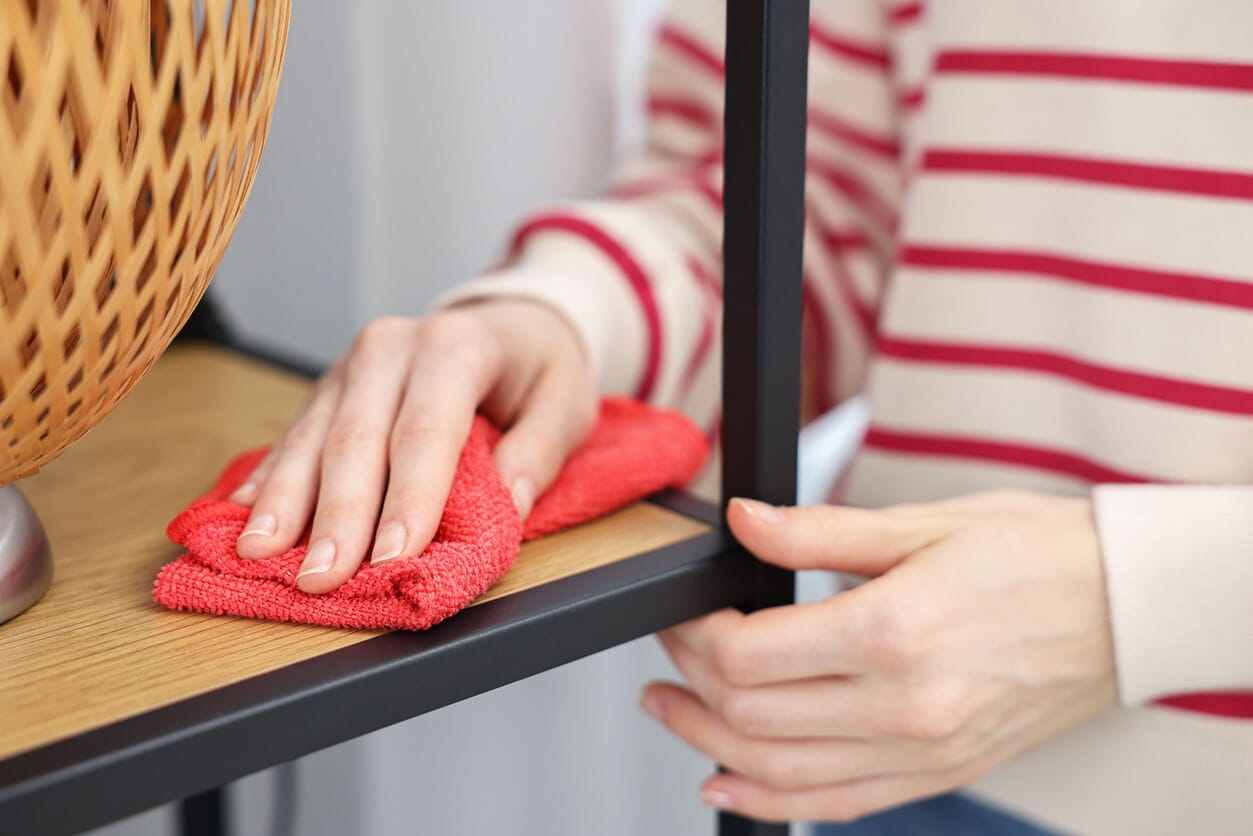
Dusting
- Put the feather duster away. It mostly relocates dust.
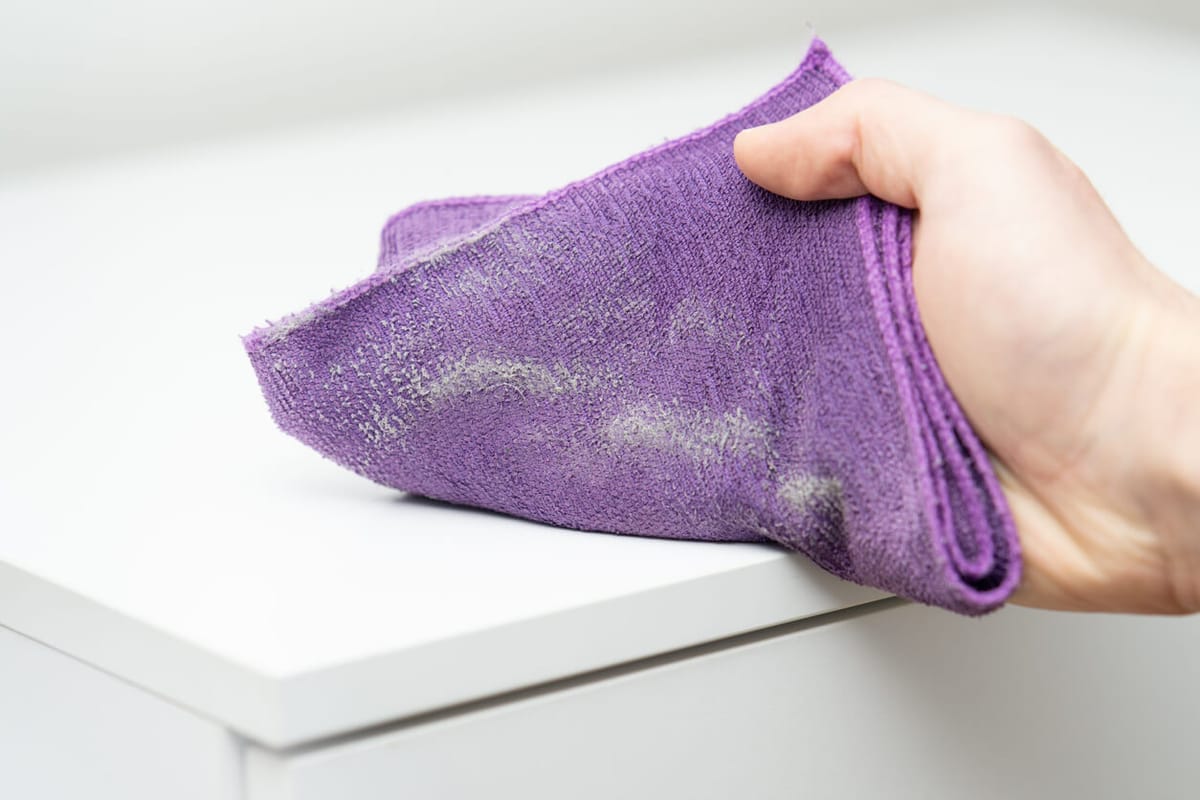
- Use a damp microfiber cloth. Slightly damp, not wet. Dust sticks to it instead of floating off. Plain water works, or a little dish soap.
- Spray the cloth, not the surface, if you use a furniture product. Spraying the shelf pushes dust into the air.
- Work top to bottom. Shelves, frames and light fixtures first, floors last, so you are not dusting onto a clean floor.
Floors
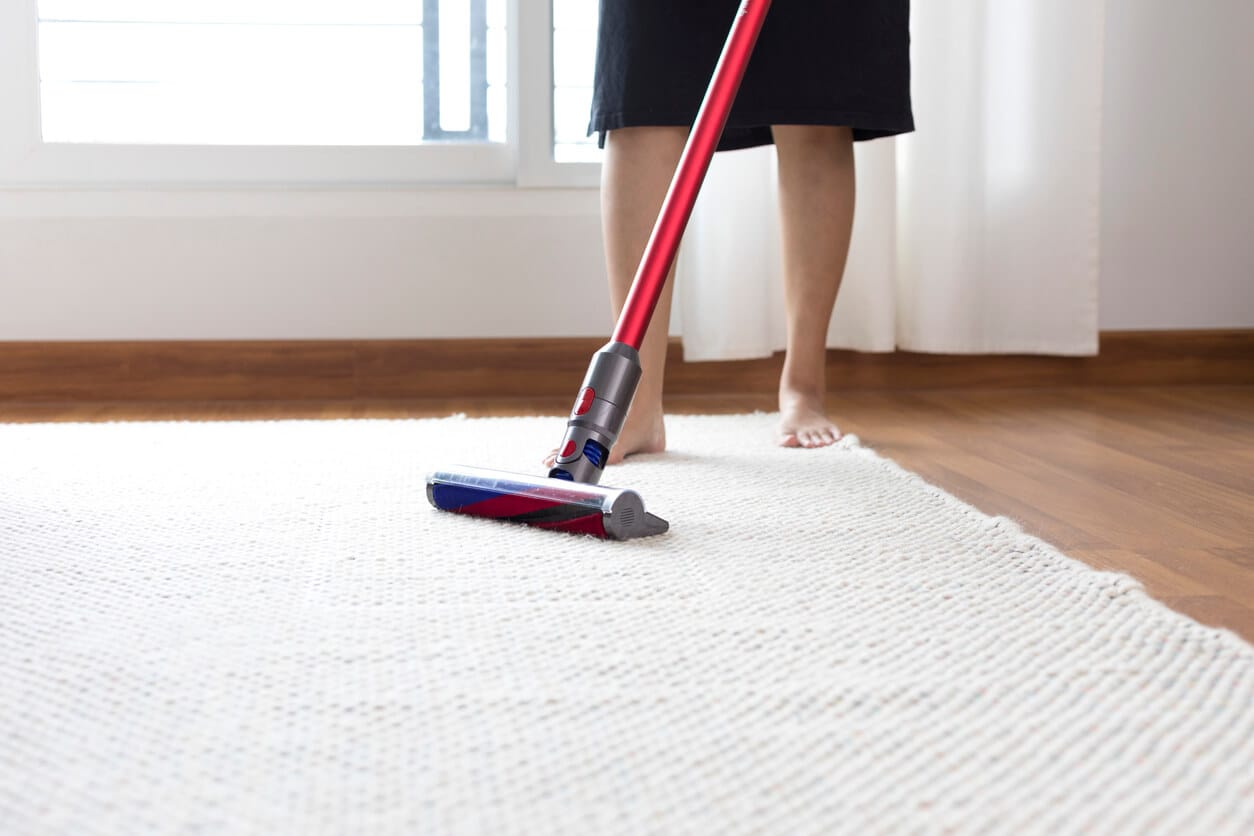
- Vacuum with a HEPA filter, at least once a week. A HEPA filter holds on to the fine particles a standard vacuum blows back out of the exhaust.
- Use the attachments. Dust collects where the vacuum head does not reach: under sofa cushions, along baseboards, in room corners and in the tracks of sliding doors and windows.
- Damp mop hard floors instead of sweeping. A broom puts fine dust into the air. A damp mop collects it.
- Change or empty the vacuum filter regularly. A clogged filter stops doing its job.
Air and Entry
- Take shoes off at the door. Soil, pesticides and road grime ride in on shoes, and in a Seattle winter that means wet mud on top of it.
- Use a good doormat inside and out. It catches dirt before it reaches the carpet.
- Change the furnace filter every one to three months during the heating season, more often with pets.
- Consider a portable HEPA air cleaner for bedrooms. Skip models with ionizers or ozone generators, which can add to indoor pollution rather than reduce it.
- Air the house out on dry days. Even ten minutes with windows open helps, and Seattle does get a few dry winter afternoons.
Hands and Kids
- Wash hands before eating, especially kids, since that is the route most swallowed dust takes.
- Wash toys that live on the floor now and then, and the soft ones in the laundry.
Where Dust Builds Up in a Seattle Home
A closed-up Seattle house in winter collects dust in predictable places. These are the ones to add to your routine:
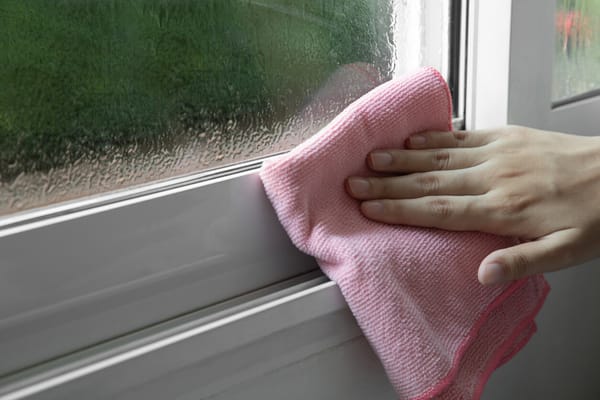
- Window tracks and sills. Condensation turns dust into a gray paste that stays put. Vacuum, then wipe.
- Heating vents and baseboard heaters. Warm air moves dust around the room every time the heat comes on.
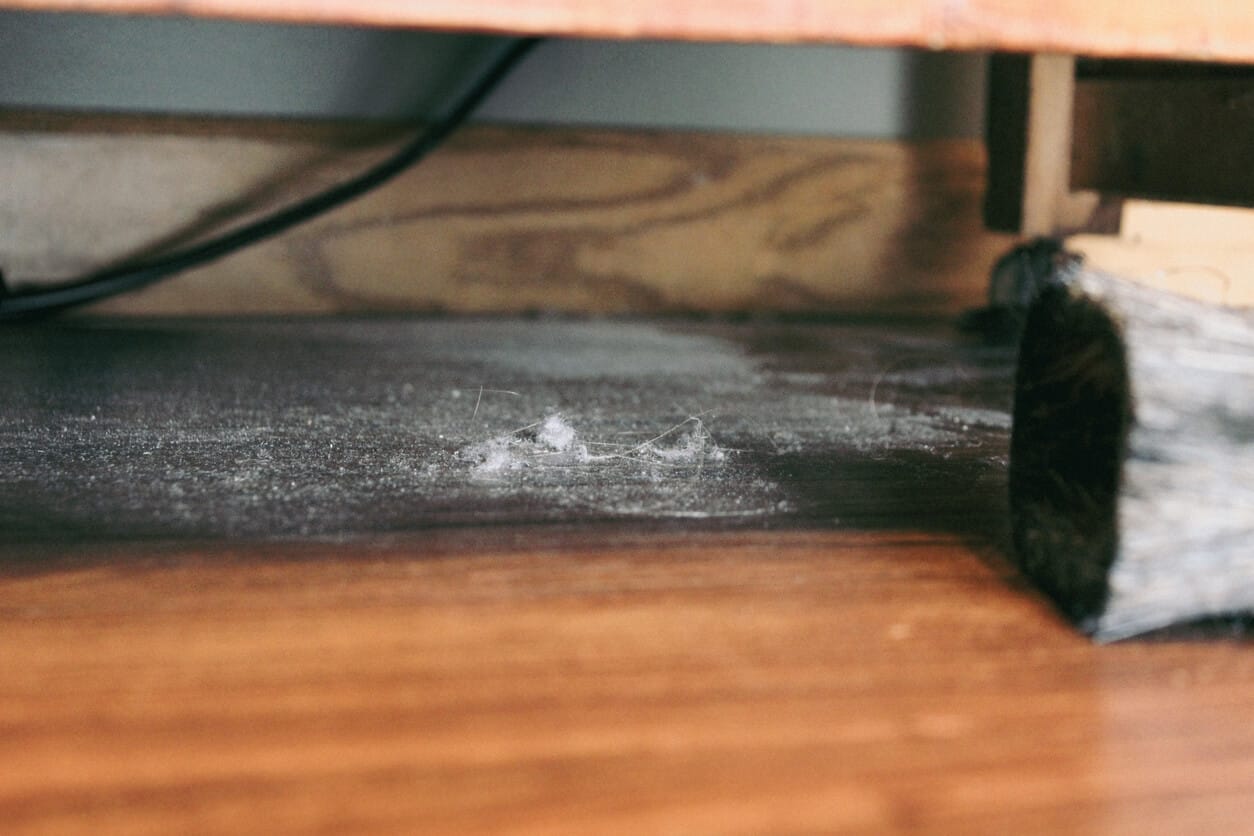
- Under and behind furniture. Sofas, beds and the space behind the TV unit, where electronics also shed dust of their own.
- Ceiling fans and light fixtures. Out of sight, and they drop dust when they are switched on.
- Upholstery and rugs. Fabric holds dust deep in the fibers. Vacuum with the upholstery tool, not just the floor head.
The Simply Clean guide to places you always forget to clean covers more of these, and the fall cleaning guide explains why a closed-up house changes what needs cleaning.
One more Seattle note: many homes here were built before 1978, when lead paint was banned. In an older house, dust near old painted windows and trim can carry lead. Damp wiping and HEPA vacuuming are the right methods there too, and dry sanding or scraping old paint is not a cleaning job. If you are unsure, the EPA's lead guidance is the place to start.
Late summer adds another source. During wildfire smoke seasons, fine particles drift in through vents and gaps and settle on floors and surfaces. Once the air clears, a round of damp dusting and HEPA vacuuming removes what settled.
What About Cleaning Products?
Some cleaning products add to the problem they are meant to solve. Strong fragrance, aerosol sprays and some stain and water repellent treatments put more chemicals into the air and dust.
A few simple swaps help:
- Choose fragrance-free or lightly scented products where you can.
- Prefer pump sprays and liquids over aerosols.
- Skip stain-repellent treatments for carpets and sofas unless you really need them. They are a common source of PFAS.
- For most dusting, water, mild soap, a microfiber cloth and a HEPA vacuum do the job.
Washington is moving in the same direction. Under the state's Safer Products for Washington program, PFAS have been restricted in new carpets, rugs and aftermarket stain and water resistance treatments since January 2025 and in new indoor upholstered furniture since January 2026, and restrictions for cleaning products start in January 2027. That helps with new products, but it does nothing about what has already settled into a home, which is where cleaning comes in.
How Often Should You Clean for Dust?
The research points to consistency rather than intensity. A practical rhythm for most Seattle homes:
- Weekly: vacuum floors and rugs, damp dust the surfaces people touch and the ones at child height, damp mop hard floors.
- Every two to four weeks: upholstery, under cushions, baseboards, window sills and tracks, vents.
- Seasonally: behind and under furniture, ceiling fans, light fixtures, blinds, furnace filter.
Homes with young children, pets, allergies or asthma usually need the weekly part done properly every week. That is the hardest part to keep up with, and it is where a regular clean earns its place.
When a Professional Clean Makes Sense
You do not need a cleaning service to reduce dust. Everything above is doable with a vacuum, a few microfiber cloths and some routine.
Where it helps is consistency. A recurring clean, weekly or every other week, means the floors, surfaces and bathrooms get done on schedule even in the weeks life gets in the way.
Homeowners who book recurring cleanings through Simply Clean can request eco-friendly or fragrance-free products when they book.
And if dust has built up for a while, behind furniture, on fans and vents and in the window tracks, a deep clean resets the house so the weekly routine starts from zero rather than catching up.
Either way, it is worth asking whoever cleans your home what they dust with and what vacuum they use. Damp cloths and HEPA filters make the difference this article is about.
This article is general information, not medical advice. If anyone in your home has asthma or allergies, talk with your doctor.
Frequently Asked Questions
What chemicals are found in household dust?
Studies of US homes regularly find phthalates, phenols, flame retardants, fragrance chemicals and PFAS, often called forever chemicals. They come off furniture, carpets, electronics, plastics, cleaning products and personal care products, and settle into the dust over time.
Can household dust affect your health?
Research links several chemicals found in dust to hormone disruption, allergies and asthma flare-ups, and some studies are looking at links to more serious conditions. Young children are the most exposed because they spend time on the floor and put their hands in their mouths. The science is still developing, but reducing dust is a simple, low-cost step.
What is the best way to dust without spreading it?
Use a slightly damp microfiber cloth instead of a feather duster or dry cloth, spray any product onto the cloth rather than the surface, and work from top to bottom. On floors, vacuum with a HEPA filter and damp mop instead of sweeping.
How often should I vacuum to reduce dust?
At least once a week for most homes, using the attachments for corners, baseboards, cushions and window tracks. Homes with young children, pets or allergies benefit from weekly vacuuming done thoroughly every time.
Does cleaning actually reduce chemical exposure?
Yes. In a small 2019 study, mothers who added regular house cleaning or hand washing saw levels of several flame retardant markers drop by roughly a third to a half within a week. Consistent cleaning and hand washing, especially before meals, are among the most effective things a household can do.
Why does dust build up more in Seattle in winter?
From October to March, Seattle homes stay closed up with the heating running, so dust is not aired out and people spend more time inside. Condensation also makes dust stick in window tracks and sills, so those spots need regular attention.
The Short Version
Household dust carries small amounts of chemicals from the things in your home, and in a closed-up Seattle winter there is more of it around. You cannot remove it all, but you can cut it down: damp cloths instead of dusters, a HEPA vacuum weekly, a damp mop instead of a broom, shoes off at the door and clean hands before meals. Research shows better habits make a measurable difference within weeks.
If you would like help keeping it up, Simply Clean has connected homeowners across Seattle and the Eastside with vetted, insured, independent cleaning professionals since 2008. Check pricing or get an instant quote in about a minute.